
VirtuEnkel — Patient Tech Support for Seniors
A retro desk lamp that coaches seniors through their own smartphones, using voice and a laser that points at the screen.
VirtuEnkel is an AI-powered device disguised as a vintage lamp that helps seniors with smartphone and other digiral tasks: describe your problem out loud, and it replies with spoken steps while a small laser points at exactly where to tap. Informed by interviews and prototype testing with seniors 75+.
Overview
This was our project in the course Design Workshop 2 led by Prof. Dr. Alexander Wiethoff.
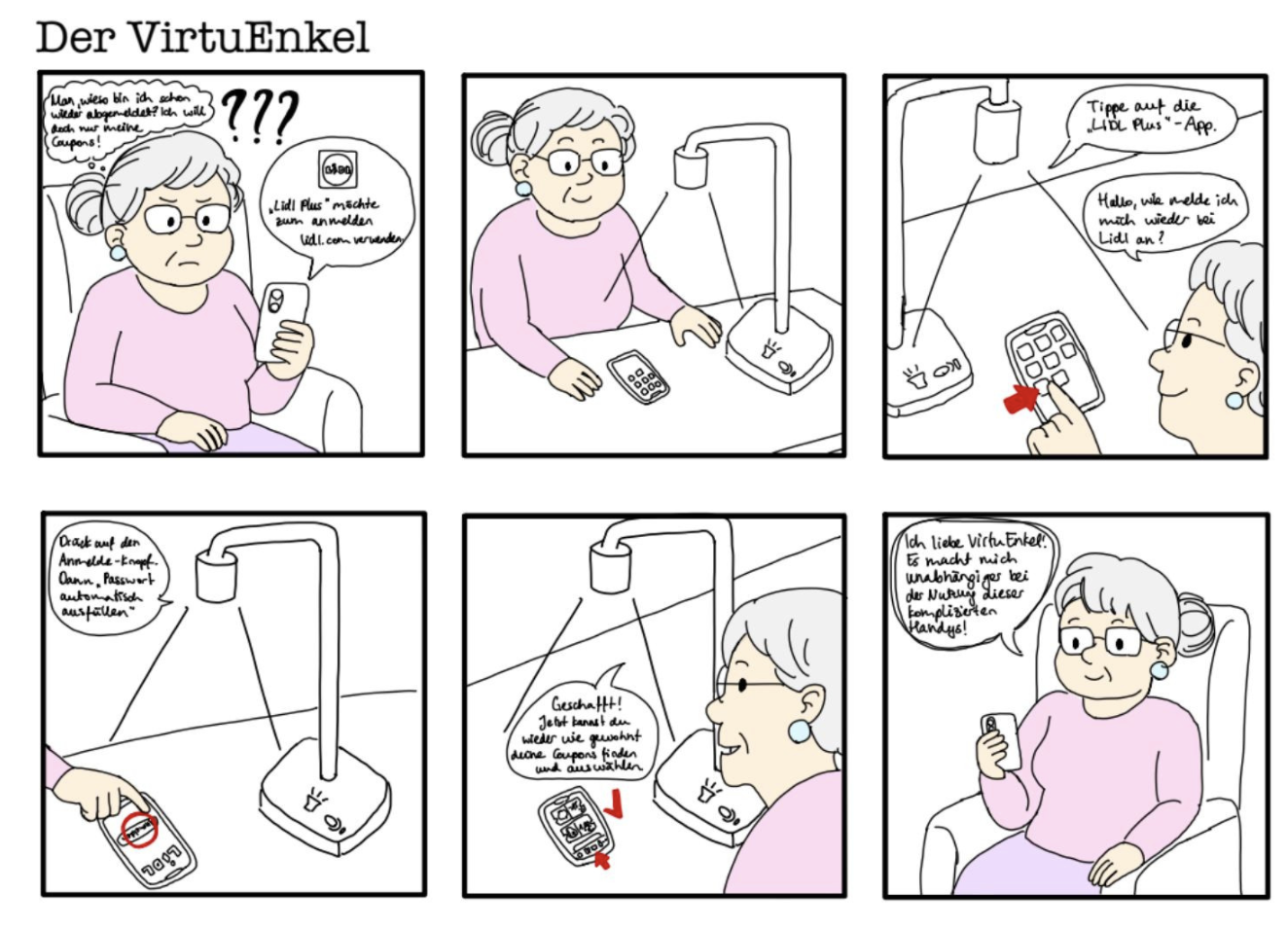
For people over 75, the barrier to digital tasks usually isn’t ability — it’s the lack of patient and available help. VirtuEnkel is a device disguised as a familiar vintage lamp: you place your phone (or any other device) underneath, describe your problem out loud and it replies with spoken steps while a small laser points to exactly where to tap.
Prototyping Process
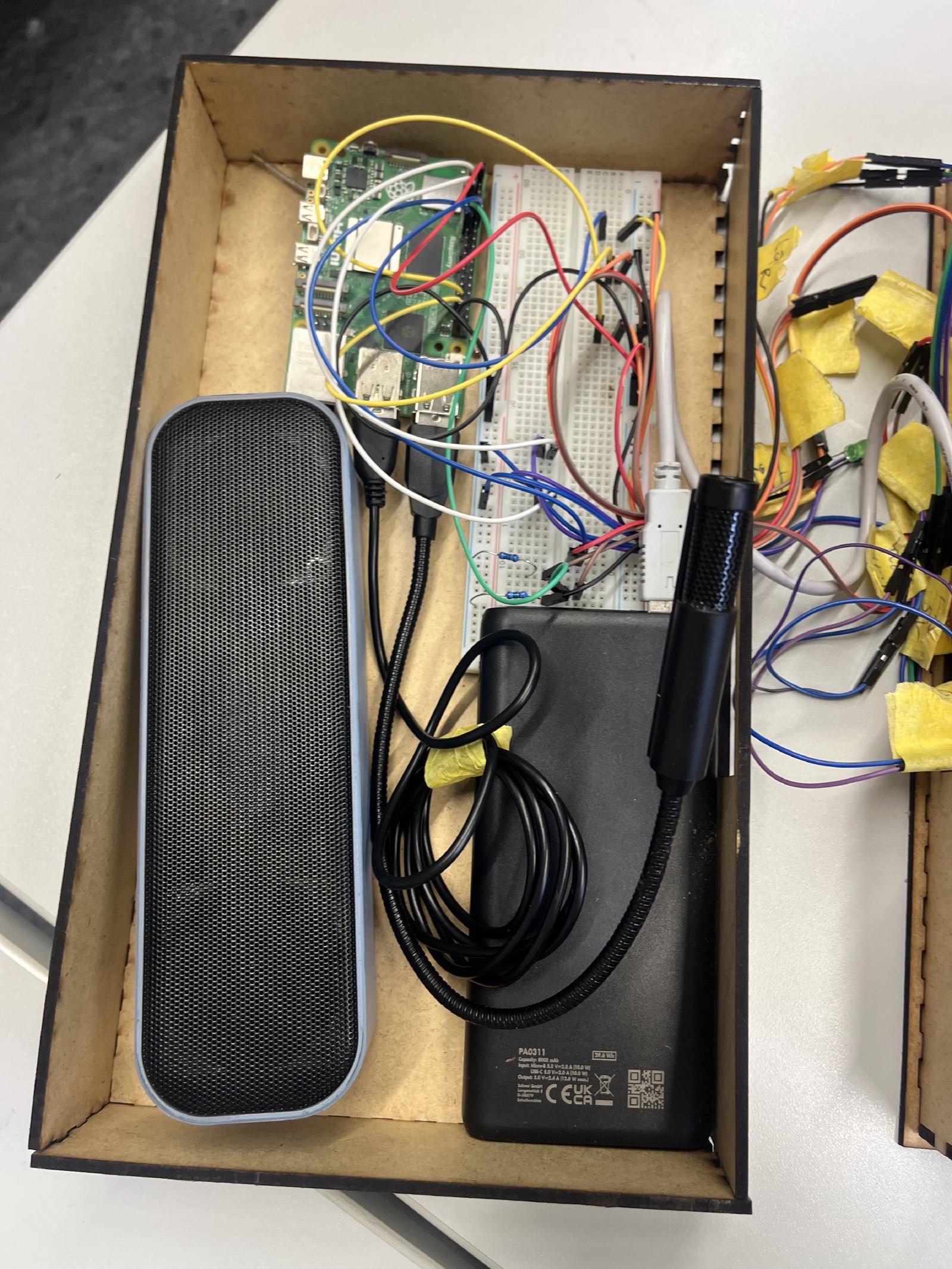
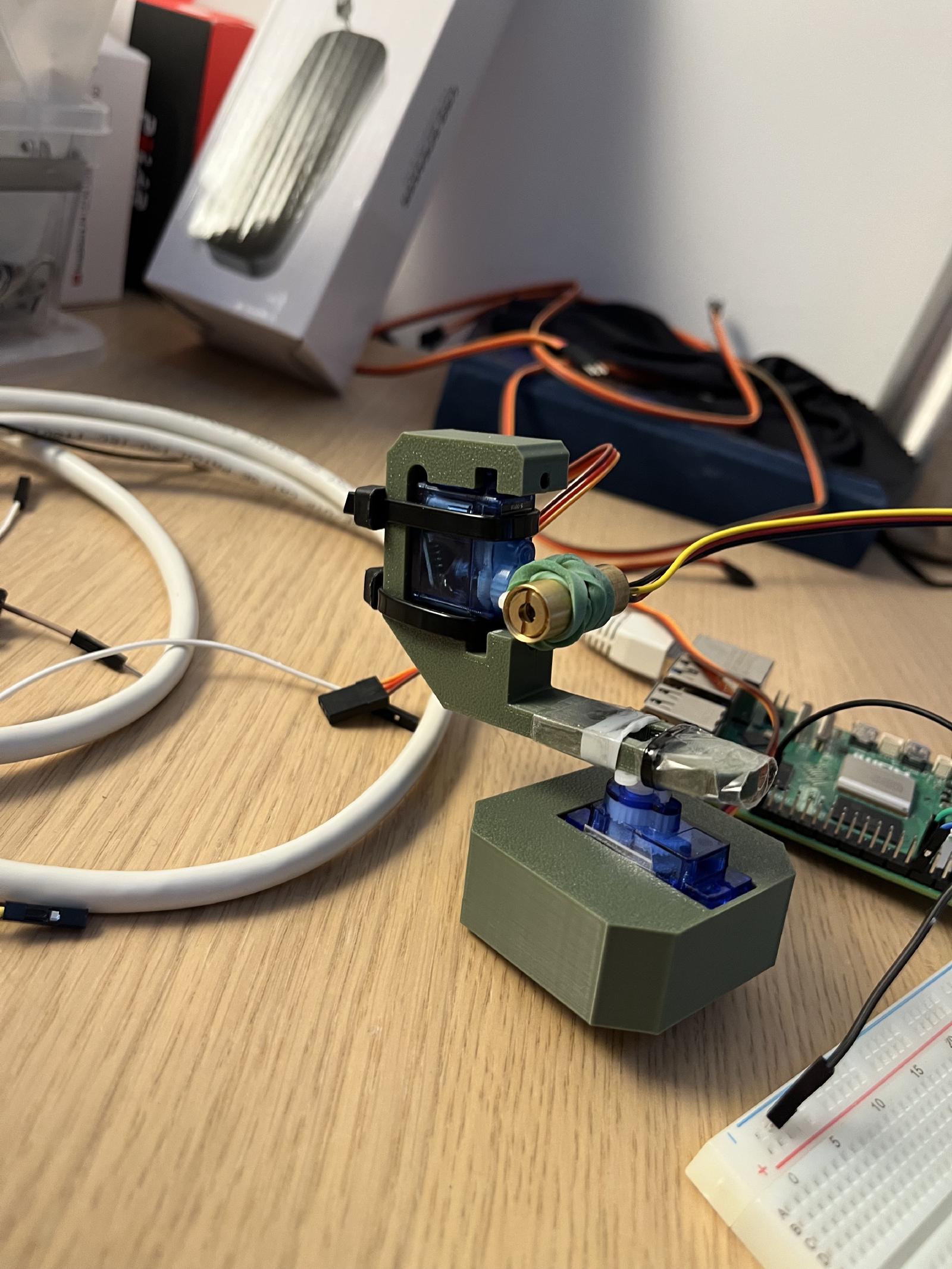
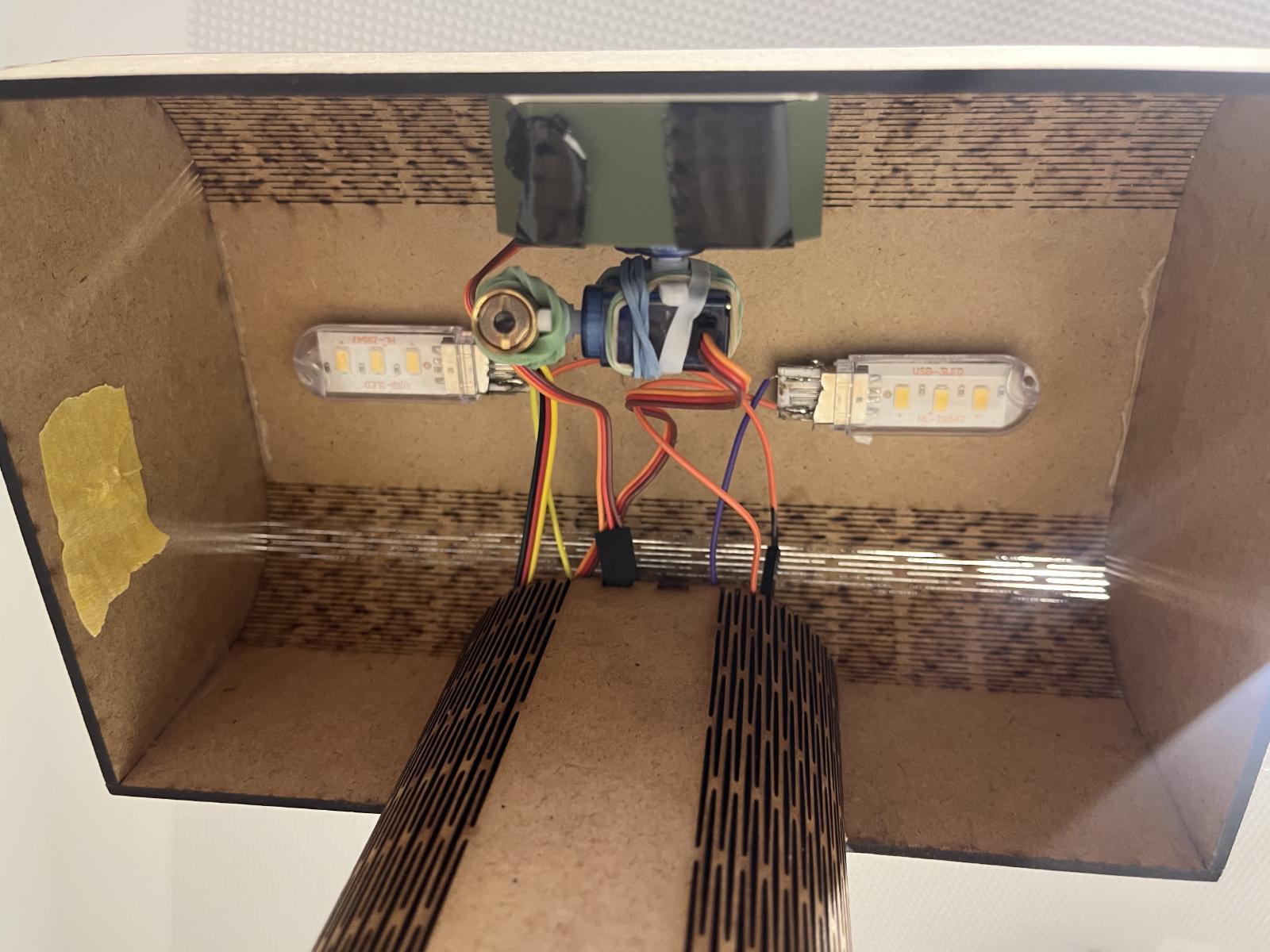
The system runs entirely on a Raspberry Pi 5 powered by a powerbank: a USB microphone captures the spoken question, speech recognition works out which app and which button the person needs, and the answer comes back as spoken steps through a USB speaker — while a laser mounted on two servo-motors points directly at the tap target on the phone screen underneath.
Our Insights from the interviews
We worked through interviews with seniors 75+ (via Munich’s DigitaleHilfe program) and several prototype iterations tested with the same group. The recurring finding: familiarity and trust matter more than features.
- A manual microphone button beat voice-activated listening — seniors wanted to control when they were heard.
- A non-technical, lamp-like aesthetic lowered the barrier to trying it at all.
- Contextual help (pointing at the exact tap target) beat any added functionality.
- Self-efficacy Seniors were juggling a wide range of i.e. banking apps and phone models, and wanted to solve problems themselves rather than repeatedly asking their grandchildren or others for help.
My Role
I built the working prototype end to end - hardware (Raspberry Pi 5, two-axis servo laser, mic, speaker), German speech recognition, flow management, and the live lamp-to-phone connection. Also I facilitated the ideation workshops as well as conducting the interviews.